Share
Like
Comment
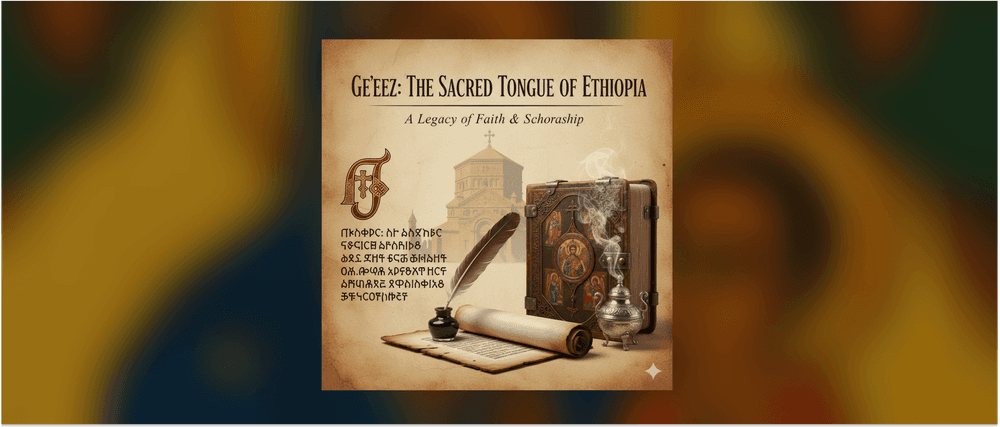
Ge'ez is an ancient Semitic language that serves as the liturgical language of the Ethiopian Orthodox Tewahedo Church. Though no longer spoken in daily life, it remains vital for religious texts, prayers, and church services, functioning similarly to Latin in Catholicism. The language has its own unique script and has profoundly shaped Ethiopian Christian identity and scholarship for over 1,500 years.
by Shimelis G —2 min read
Ge'ez (ግዕዝ), also known as Ethiopic, holds a position of profound reverence within the Ethiopian Orthodox Tewahedo Church. This ancient Semitic language, which ceased to be spoken as a mother tongue around the 10th century CE, continues to serve as the liturgical and scriptural language of one of the world's oldest Christian traditions.
The Ethiopian Orthodox Church traces its roots to the 4th century CE when Christianity was introduced to the Aksumite Kingdom. Ge'ez was already the language of this powerful civilization, and it naturally became the vehicle for expressing the new faith. The translation of the Bible into Ge'ez represents one of the earliest complete translations of Christian scripture, predating many European versions.
Within Ethiopian Orthodox worship, Ge'ez functions as the exclusive language of the Divine Liturgy (Qeddase). Priests chant prayers, hymns, and biblical readings in Ge'ez, creating a sacred atmosphere that connects contemporary worshippers with centuries of tradition. The faithful believe that using this ancient language maintains the purity and authenticity of their worship practices.
The language employs a unique alphasyllabary writing system called Fidäl, consisting of over 200 characters. Each character represents a consonant-vowel combination, making it distinct from both alphabetic and purely syllabic systems. This script is still used today for writing modern Ethiopian languages like Amharic and Tigrinya.
Ge'ez literature encompasses far more than biblical texts. The Ethiopian Orthodox Church has preserved numerous theological works, hagiographies, and liturgical texts in Ge'ez, including unique books not found in other Christian canons, such as the Book of Enoch and the Book of Jubilees in their complete forms. Monastic schools continue to teach Ge'ez to ensure the preservation of this vast literary heritage.
Today, Ge'ez remains essential for Ethiopian Orthodox clergy, who must master the language to perform their duties. While most laypeople do not understand Ge'ez, its use in worship is seen as maintaining a direct link to the apostolic age and preserving the church's distinctive identity in an increasingly globalized world.
 Unknown
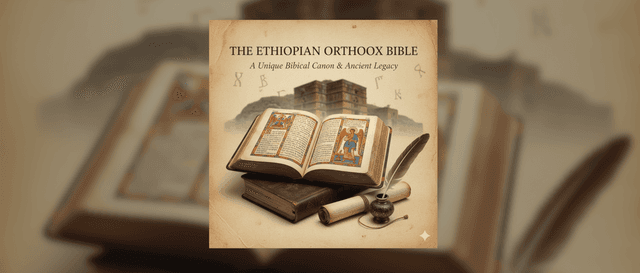
The Ethiopian Orthodox Church has the largest biblical canon with 81 books, including texts like the Book of Enoch and the Book of Jubilees, preserved in Ge'ez since the 4th century. These books, considered authoritative, shape its theology and liturgy. The canon reflects a unique Christian tradition, with ancient manuscripts still central to worship and identity.