Share
Like
Comment

The Ethiopian Orthodox Church has the largest biblical canon with 81 books, including texts like the Book of Enoch and the Book of Jubilees, preserved in Ge'ez since the 4th century. These books, considered authoritative, shape its theology and liturgy. The canon reflects a unique Christian tradition, with ancient manuscripts still central to worship and identity.
by Unknown —3 min read
The Ethiopian Orthodox Tewahedo Church possesses the most comprehensive biblical canon of any Christian denomination, containing 81 books compared to the 66 books in Protestant Bibles or 73 in Catholic traditions. This expanded scripture, preserved in Ge'ez manuscripts for over a millennium, offers unique insights into early Christian textual traditions and theological perspectives.
The Ethiopian biblical canon took shape during the 4th and 5th centuries CE, when the Aksumite Kingdom embraced Christianity. Isolated geographically from the theological controversies that shaped European Christianity, the Ethiopian Church maintained texts that other traditions eventually deemed apocryphal or pseudepigraphal. This isolation proved fortuitous, as Ethiopian monasteries became repositories for complete versions of ancient works that survived elsewhere only in fragments or translations.
The Ethiopian Old Testament includes all the books found in the Septuagint, plus additional texts such as the Book of Enoch, the Book of Jubilees, and 1-3 Meqabyan (distinct from the Maccabees books). The complete Book of Enoch, which exists in its entirety only in Ge'ez, profoundly influences Ethiopian Orthodox theology, particularly regarding angelology and eschatology. These texts are not considered supplementary but integral to understanding God's revelation and salvation history.
Beyond the standard 27 books, the Ethiopian New Testament incorporates eight additional texts, including the Sinodos (apostolic church order), the Book of the Covenant, and sections of the Didascalia. These works provide guidance on church governance, liturgical practice, and Christian living that the Ethiopian Church considers apostolic in origin. Their inclusion reflects a broader understanding of what constitutes authoritative Christian teaching.
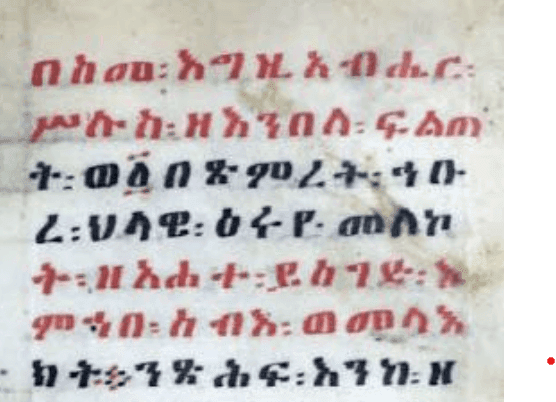
Ethiopian biblical manuscripts represent masterpieces of religious art and craftsmanship. Scribes meticulously copied texts onto vellum, often adding elaborate illuminations depicting biblical scenes and saints. These manuscripts, housed in church treasuries and monasteries throughout Ethiopia, vary in their specific contents and arrangements, reflecting regional traditions while maintaining core canonical consistency. Many date back centuries, with some fragments possibly reaching to the 6th century.
The expanded canon shapes distinctive Ethiopian Orthodox doctrines and practices. The Book of Enoch's detailed angelology informs the church's understanding of spiritual beings and cosmic history. Jubilees' emphasis on calendar and ritual purity influences liturgical observances. These texts are regularly read during services, quoted in theological discussions, and referenced in homilies, making them living documents rather than historical curiosities.
Today, the Ethiopian biblical canon stands as a testament to the diversity of early Christian textual traditions. While Western biblical scholarship has shown renewed interest in these "extra" books for understanding Second Temple Judaism and early Christianity, for Ethiopian Orthodox believers they remain sacred scripture. Modern translation efforts aim to make these texts accessible in Amharic and other languages, though the Ge'ez versions retain primary authority. This unique canon continues to define Ethiopian Orthodox identity and distinguishes it as a guardian of ancient Christian literary heritage.

 Shimelis G
Ge'ez is an ancient Semitic language that serves as the liturgical language of the Ethiopian Orthodox Tewahedo Church. Though no longer spoken in daily life, it remains vital for religious texts, prayers, and church services, functioning similarly to Latin in Catholicism. The language has its own unique script and has profoundly shaped Ethiopian Christian identity and scholarship for over 1,500 years.
 Unknown
An in-depth exploration of how the ancient Ge'ez language was intentionally preserved by the Ethiopian Orthodox Church to serve as the living, acoustic engine of its divine liturgy for over a millennium.