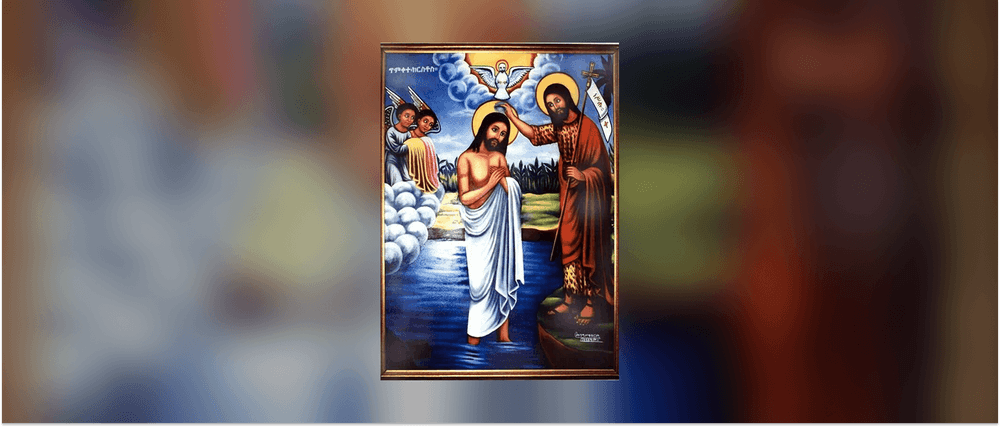
The Sacrament of Baptism
This article explores the ancient and rich tradition of baptism in the Ethiopian Orthodox Tewahedo Church, one of the oldest Christian denominations in the world. It examines the theological significance, unique rituals, and cultural practices that distinguish Ethiopian Orthodox baptism from other Christian traditions. The sacrament represents not only spiritual rebirth but also entry into a faith community that has preserved its distinctive practices for nearly two millennia.
by Unknown —8 min read
The Sacrament of Baptism in the Ethiopian Orthodox Church
Introduction
The Ethiopian Orthodox Tewahedo Church stands as one of Christianity's most ancient institutions, tracing its roots to the conversion of the Ethiopian eunuch in the Book of Acts. Within this venerable tradition, baptism (T'emqet in Ge'ez) holds a place of paramount importance as the gateway to Christian life and the first of seven holy sacraments. The Ethiopian Orthodox approach to baptism reflects a unique synthesis of early Christian practices, indigenous Ethiopian culture, and theological interpretations that have remained largely unchanged for centuries.
Theological Foundation
In Ethiopian Orthodox theology, baptism is understood as the essential sacrament of spiritual rebirth and regeneration. The church teaches that through baptism, the original sin inherited from Adam is washed away, and the baptized person becomes a new creation in Christ. This transformation is not merely symbolic but represents a genuine ontological change in the person's spiritual state.
The Ethiopian Orthodox Church emphasizes the Trinitarian formula in baptism, invoking the Father, Son, and Holy Spirit. The sacrament is seen as participation in Christ's own baptism in the Jordan River and, more profoundly, in His death and resurrection. This paschal dimension of baptism is central to Ethiopian Orthodox understanding—the baptized person dies to sin and rises to new life in Christ.
The Practice of Infant Baptism
The Ethiopian Orthodox Church practices infant baptism exclusively, typically administering the sacrament on the 40th day after birth for male children and the 80th day for female children. These specific timings are rooted in Old Testament purification laws found in Leviticus, reflecting the church's deep connection to its Hebraic heritage.
This timing also coincides with the mother's purification period, after which she can return to church and receive Holy Communion. The entire family participates in this joyous occasion, which marks the child's formal entry into the church community.
The Baptismal Ceremony
Preparation and Exorcism
The baptismal rite begins with prayers of exorcism, during which the priest commands any evil spirits to depart from the child. The godparents (kirā), who play a crucial role in the ceremony, renounce Satan on behalf of the infant and profess faith in Christ. This renunciation is taken with utmost seriousness, as godparents assume spiritual responsibility for the child's Christian upbringing.
The Triple Immersion
The most distinctive feature of Ethiopian Orthodox baptism is the practice of triple immersion. Unlike the single immersion or sprinkling practiced in many Western churches, the Ethiopian Orthodox priest immerses the infant completely in water three times—once for each person of the Holy Trinity.
The priest holds the child and plunges them fully into the baptismal water (or font) while pronouncing: "I baptize you in the name of the Father" (first immersion), "and of the Son" (second immersion), "and of the Holy Spirit" (third immersion). This triple immersion symbolizes Christ's three days in the tomb and emphasizes the completeness of the spiritual transformation.
Anointing with Myron
Immediately following baptism, the child receives the sacrament of Chrismation (anointing with holy oil called Myron). In the Ethiopian Orthodox tradition, baptism and chrismation are never separated—they form a unified initiation rite. The priest anoints the child on the forehead, eyes, nostrils, mouth, ears, chest, hands, and feet, sealing them with the gift of the Holy Spirit.
The Myron used in Ethiopian Orthodox churches is specially consecrated and contains a mixture of numerous aromatic substances and oils. Traditionally, this holy chrism is believed to contain elements dating back to the original Myron prepared by the apostles, creating a tangible link to the apostolic age.
The White Garment
After baptism and chrismation, the child is dressed in a white garment (k'ämis), symbolizing the purity received through the sacrament and the new life in Christ. This white clothing represents the "putting on of Christ" mentioned in Galatians 3:27. The child typically wears this garment for several days following the baptism.
The Role of Godparents
Godparents hold a position of great importance in Ethiopian Orthodox baptism. They are not merely ceremonial figures but take on genuine spiritual obligations toward their godchild. The godparents must be practicing Orthodox Christians who can guide the child in the faith.
The relationship between godparents and godchild is considered sacred and lifelong. Godparents are expected to:
- Ensure the child receives proper religious education
- Attend important religious milestones in the child's life
- Provide spiritual counsel and support
- Serve as role models of Orthodox Christian living
In Ethiopian culture, the bond between godparents and godchildren often becomes as strong as biological family ties.
Baptismal Names
During the ceremony, the child receives a Christian name, often that of a saint or biblical figure. In Ethiopian Orthodox tradition, many children are named after saints whose feast days fall near their birth or baptism date. Popular baptismal names include:
- Gebre (servant of) followed by a divine name (e.g., Gebre Mariam - servant of Mary)
- Names of apostles and evangelists (Matewos, Marqos, Luqas, Yohannes)
- Names of Ethiopian saints (Tekle Haymanot, Gebre Menfes Qiddus)
The baptismal name carries spiritual significance and is used in all religious contexts, though individuals may use different names in daily life.
Unique Ethiopian Practices
The Baptismal Pool
Many Ethiopian Orthodox churches feature dedicated baptismal pools or fonts, often ornately decorated and positioned prominently within the church compound. In rural areas, natural water sources such as rivers or springs may be used, weather permitting. The use of flowing or "living water" is considered especially appropriate, echoing early Christian baptismal practices.
Post-Baptismal Observances
Following baptism, Ethiopian Orthodox families observe several customs:
- The child is brought to church regularly to receive blessings
- Special prayers are offered for the child's spiritual growth
- The family may host a feast to celebrate the baptism
- The white baptismal garment is carefully preserved as a sacred item
The Connection to Timkat
The annual feast of Timkat (Epiphany), which commemorates Christ's baptism in the Jordan, holds special significance for all baptized Ethiopian Orthodox Christians. During this celebration, the faithful renew their baptismal vows and water is blessed in elaborate ceremonies featuring colorful processions and the sacred Tabot (replica of the Ark of the Covenant).
Theological Distinctives
Baptismal Regeneration
The Ethiopian Orthodox Church firmly teaches baptismal regeneration—the belief that baptism is not merely a symbol but actually effects spiritual transformation. Through baptism, the person receives:
- Forgiveness of original sin
- The indwelling of the Holy Spirit
- Adoption as a child of God
- Membership in the Body of Christ (the Church)
- The right to receive other sacraments
Necessity of Baptism
Ethiopian Orthodox theology holds that baptism is necessary for salvation, based on Christ's words in John 3:5: "Unless one is born of water and the Spirit, he cannot enter the kingdom of God." However, the church also recognizes God's mercy and does not presume to limit God's salvific action.
Baptism and Communion
In the Ethiopian Orthodox tradition, baptized infants begin receiving Holy Communion immediately after their baptism. This practice, which differs from many Western churches, reflects the understanding that baptism fully incorporates the person into the church and makes them eligible for all sacraments. Even infants are considered full members of the church, capable of receiving Christ's Body and Blood.
Pastoral and Social Dimensions
Baptism in the Ethiopian Orthodox Church extends beyond individual salvation to encompass communal and social dimensions. The sacrament:
- Integrates the child into the church community
- Establishes spiritual kinship networks through godparenthood
- Marks a significant milestone in family life
- Reinforces cultural and religious identity
- Creates obligations of mutual support and care
In Ethiopian society, baptism serves as a crucial rite of passage that affirms the child's place within both the religious community and the broader social fabric.
Challenges and Contemporary Context
While the Ethiopian Orthodox Church maintains its ancient baptismal traditions, it faces certain contemporary challenges:
- Diaspora communities must adapt practices to different cultural contexts while preserving essential elements
- Interfaith marriages raise questions about baptism and religious identity
- Modern medical concerns sometimes conflict with traditional timing of baptism
- Urbanization has changed some traditional community aspects of the celebration
Despite these challenges, the Ethiopian Orthodox Church remains committed to preserving its distinctive baptismal practices as a vital link to its apostolic heritage.
Conclusion
The sacrament of baptism in the Ethiopian Orthodox Tewahedo Church represents a living connection to the earliest Christian practices, preserved and enriched through centuries of faithful observance. The triple immersion, immediate chrismation, infant communion, and the sacred timing of the ceremony all reflect a theological vision that emphasizes the transformative power of God's grace and the communal nature of Christian life.
For Ethiopian Orthodox Christians, baptism is not a mere formality but the essential beginning of a lifelong journey of faith. It establishes an indelible spiritual mark, incorporates the baptized into Christ's mystical body, and opens the door to all other sacraments. The beauty and solemnity of the Ethiopian Orthodox baptismal rite continue to inspire the faithful and witness to the enduring power of this ancient sacrament.
As the church moves forward in the 21st century, it carries with it these precious traditions, adapting to new circumstances while maintaining the essential elements that have defined Ethiopian Orthodox baptism for nearly two millennia. In doing so, it offers the modern world a glimpse of Christianity's rich diversity and the profound depths of sacramental theology.
The Latest
Read More
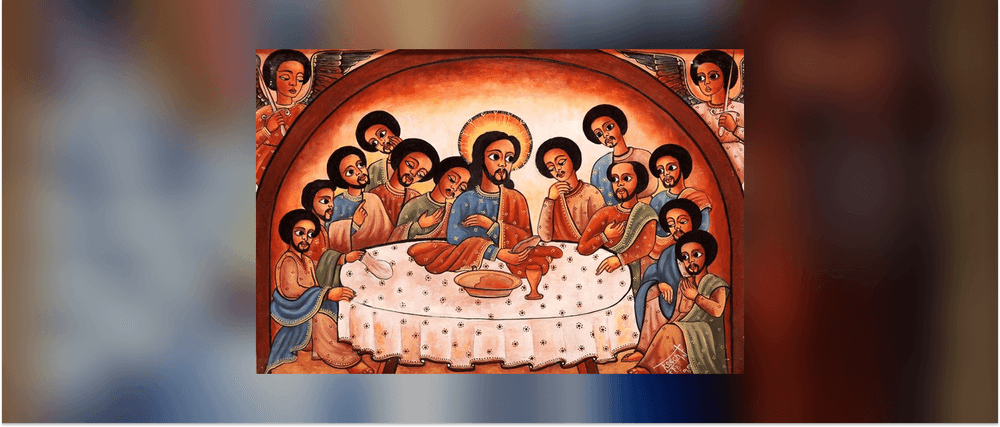
The Mystery of the Holy Communion
This article delves into the sacred Mystery of Holy Communion (*Qurban*) in the Ethiopian Orthodox Tewahedo Church, exploring its profound theological significance as the central act of Christian worship. It examines the unique liturgical practices, preparation requirements, and spiritual understanding that characterize the Ethiopian Orthodox Eucharist. The article reveals how this ancient church has preserved early Christian eucharistic traditions while developing distinctive practices that reflect its rich theological and cultural heritage.
Read Full Story