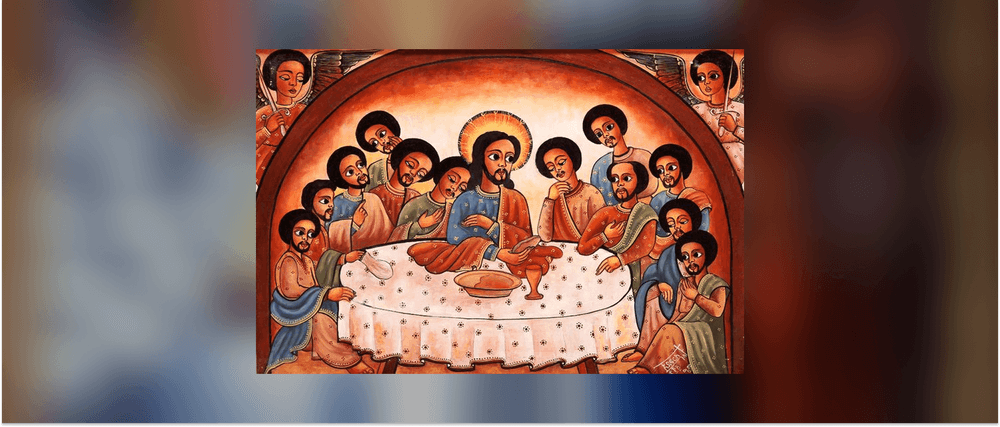
The Mystery of the Holy Communion
This article delves into the sacred Mystery of Holy Communion (*Qurban*) in the Ethiopian Orthodox Tewahedo Church, exploring its profound theological significance as the central act of Christian worship. It examines the unique liturgical practices, preparation requirements, and spiritual understanding that characterize the Ethiopian Orthodox Eucharist. The article reveals how this ancient church has preserved early Christian eucharistic traditions while developing distinctive practices that reflect its rich theological and cultural heritage.
by Unknown —15 min read
The Mystery of the Holy Communion in the Ethiopian Orthodox Church
Introduction
In the Ethiopian Orthodox Tewahedo Church, the Holy Communion—known as Qurban in Ge'ez (meaning "offering" or "sacrifice")—stands as the supreme mystery and the heart of Christian worship. This sacrament, instituted by Christ at the Last Supper, is understood not as a mere memorial but as a genuine participation in the Body and Blood of Jesus Christ. The Ethiopian Orthodox approach to the Eucharist reflects a theology and practice that has remained remarkably consistent since the early centuries of Christianity, offering modern believers a window into the ancient church's understanding of this most sacred mystery.
Theological Foundation
Real Presence and Transformation
The Ethiopian Orthodox Church teaches the doctrine of the Real Presence—the belief that the bread and wine truly become the Body and Blood of Christ during the Divine Liturgy. This transformation is not symbolic or metaphorical but ontological and mystical. The church uses the term Metir (mystery or sacrament) to emphasize the incomprehensible nature of this divine reality.
Ethiopian Orthodox theology holds that through the invocation of the Holy Spirit (Epiclesis) and the words of institution, the bread (qurban) and wine (wäyn) are transformed into the actual Body and Blood of Christ while retaining their physical appearance. This understanding aligns with the patristic theology of the early church fathers, particularly the Alexandrian tradition to which the Ethiopian church is historically connected.
Sacrifice and Memorial
The Eucharist is understood as both a bloodless sacrifice and a memorial (tezkar) of Christ's passion, death, and resurrection. Each celebration of the Divine Liturgy is not a repetition of Christ's sacrifice on Calvary but a mystical participation in that one eternal sacrifice. The Ethiopian Orthodox Church teaches that when the faithful gather for the Qurban, they transcend time and space to stand at the foot of the cross and before the empty tomb.
This sacrificial dimension is emphasized throughout the Ethiopian liturgy, with numerous references to Christ as the "Lamb of God" who takes away the sins of the world. The liturgical prayers repeatedly invoke the sacrifice of Christ and its saving power for the faithful.
Communion of Heaven and Earth
Ethiopian Orthodox eucharistic theology emphasizes that during the Divine Liturgy, heaven and earth unite. The faithful on earth join with the angels, saints, and the entire heavenly host in worshiping God. This cosmic dimension of the Eucharist is reflected in the liturgical texts, which frequently mention the "heavenly Jerusalem," the "cherubim and seraphim," and the communion of saints.
The Divine Liturgy
The Liturgical Texts
The Ethiopian Orthodox Church uses several ancient liturgies (Qeddase), each attributed to different apostles and church fathers:
- The Liturgy of the Apostles (Qeddase Hawaryat) - the most commonly used, attributed to the Twelve Apostles
- The Liturgy of St. Basil (Qeddase Baslewos) - used on major feast days
- The Liturgy of St. Gregory (Qeddase Grigoryos) - also known as the Liturgy of St. Gregory the Illuminator
- The Liturgy of St. Cyril (Qeddase Qerillos) - used on special occasions
- The Liturgy of St. Epiphanius (Qeddase Epifanyos) - used during Lent and other fasting periods
Each liturgy contains the same essential elements but varies in length, specific prayers, and theological emphasis. The liturgies are celebrated in Ge'ez, the ancient liturgical language of the Ethiopian church, though some diaspora churches incorporate local languages for certain parts.
Structure of the Liturgy
The Ethiopian Orthodox Divine Liturgy follows a structured progression that can last three to four hours or longer on major feast days:
1. The Preparatory Service (Kidase Qedam)
Before the main liturgy, priests and deacons perform preparatory prayers, including:
- Prayers of incense
- Washing of hands (symbolizing purification)
- Vesting prayers as the clergy don their liturgical garments
- Preparation of the bread and wine on the altar
2. The Liturgy of the Word (Qeddase Qal)
This section includes:
- Entrance hymns and processions
- Scripture readings from the Pauline Epistles, Catholic Epistles, Acts, and Gospels
- Homily or sermon (though not always included)
- Prayers for the living and the dead
- Recitation of the Nicene Creed
3. The Liturgy of the Faithful (Qeddase Hezb)
The eucharistic prayer proper includes:
- The Anaphora (eucharistic prayer)
- The Epiclesis (invocation of the Holy Spirit)
- The Words of Institution
- Commemoration of saints and the departed
- The Lord's Prayer
- The fraction (breaking of the bread)
- Holy Communion
The Sacred Vessels and Elements
The Bread (Qurban)
The bread used in Ethiopian Orthodox Communion is specially prepared leavened bread, distinct from the unleavened bread used in some other traditions. The use of leavened bread symbolizes:
- The risen Christ (leaven representing the resurrection)
- The fullness of Christ's humanity
- The life-giving power of the Holy Spirit
The bread is baked by designated individuals (often monks or specially appointed laypeople) who must be in a state of ritual purity. It is round, stamped with crosses and religious symbols, and prepared with great reverence. Typically, thirteen loaves are prepared for each liturgy—one for each apostle and one for Christ.
The Wine (Wäyn)
The wine used is typically red wine mixed with water, symbolizing:
- The blood and water that flowed from Christ's side on the cross
- The union of Christ's divinity (wine) and humanity (water)
- The unity of Christ and His church
The Sacred Vessels
The Ethiopian Orthodox Church uses distinctive liturgical vessels:
- The Paten (Sehn) - a large plate for the bread
- The Chalice (Sos) - the cup for the wine
- The Asterisk (Kokeb) - a star-shaped cover placed over the paten
- Veils and Covers - elaborately embroidered cloths covering the holy gifts
These vessels are treated with utmost reverence and are used exclusively for the Eucharist.
Preparation for Holy Communion
Fasting Requirements
The Ethiopian Orthodox Church maintains strict fasting disciplines for those who wish to receive Holy Communion:
Daily Fasting
- Communicants must fast from midnight until after receiving Communion
- No food or drink (including water) is permitted
- This fast is considered essential preparation for receiving Christ
Extended Fasting Periods
The church observes numerous fasting seasons throughout the year, during which the faithful abstain from animal products (meat, dairy, eggs). Major fasting periods include:
- Great Lent (Hudade) - 55 days before Easter
- Fast of the Apostles - variable length, following Pentecost
- Fast of the Assumption - 15 days in August
- Fast of Advent (Tsome Gena) - 40 days before Christmas
- Wednesday and Friday fasts - observed weekly throughout the year
Faithful Orthodox Christians are expected to observe these fasts and be in a state of fasting to receive Communion.
Spiritual Preparation
Beyond physical fasting, communicants must prepare spiritually:
Confession
- Regular confession (netsanet) to a spiritual father is required
- Serious sins must be confessed before receiving Communion
- The priest provides spiritual counsel and assigns prayers or fasting as penance
Prayer and Repentance
- Increased prayer in the days leading to Communion
- Examination of conscience
- Reconciliation with others
- Reading of Scripture and spiritual texts
Ritual Purity
- Married couples abstain from sexual relations the night before Communion
- Ritual washing and cleanliness
- Proper modest attire for church attendance
Who May Receive Communion
In Ethiopian Orthodox practice:
- Baptized and chrismated Orthodox Christians in good standing may receive
- Infants and children receive Communion from the time of their baptism
- Those under ecclesiastical discipline or excommunication cannot receive
- Non-Orthodox Christians are not permitted to receive (though they may attend the liturgy)
The Act of Receiving Communion
The Distribution
The distribution of Holy Communion in the Ethiopian Orthodox Church follows a distinctive pattern:
- The priest breaks the consecrated bread into small pieces and places them in the chalice with the consecrated wine
- Communicants approach the sanctuary in reverent silence, often prostrating themselves
- The priest administers Communion using a special spoon (mestir), placing a piece of the Body soaked in the Blood directly into the communicant's mouth
- The communicant receives with hands crossed over the chest, mouth open, being careful not to let any particle fall
- After receiving, the communicant may receive blessed bread (qurban) and water to ensure no particles remain in the mouth
Posture and Reverence
The Ethiopian Orthodox faithful demonstrate profound reverence when receiving Communion:
- Approaching with head bowed and hands crossed
- Receiving standing (not kneeling, as in some Western traditions)
- Maintaining silence and prayerful demeanor
- Returning to their place with continued prayer and meditation
Post-Communion Practices
After receiving Communion, the faithful:
- Remain in church for the concluding prayers and dismissal
- Maintain the eucharistic fast for at least one hour after Communion
- Avoid spitting or clearing the throat to ensure no particles are expelled
- Spend time in thanksgiving prayer
- Maintain a spirit of reverence throughout the day
Distinctive Ethiopian Practices
Infant Communion
One of the most distinctive features of Ethiopian Orthodox practice is the communion of infants. From the moment of baptism, Ethiopian Orthodox children receive Holy Communion at every liturgy they attend. This practice reflects the belief that:
- Baptism fully incorporates one into the church
- Christ's words "let the children come to me" apply to the Eucharist
- Spiritual nourishment is necessary for spiritual growth from infancy
- The Eucharist is medicine for the soul, needed by all ages
Infants receive a small portion of the consecrated elements, administered with the same reverence as for adults.
The Tabot and the Altar
The Ethiopian Orthodox understanding of the Eucharist is intimately connected to the Tabot—a consecrated tablet representing the Ark of the Covenant and the presence of God. The Tabot is:
- Kept in the Holy of Holies (the innermost sanctuary)
- Considered essential for celebrating the liturgy
- Carried in processions during major feasts
- Treated as the most sacred object in the church
No Divine Liturgy can be celebrated without a Tabot present on the altar, emphasizing the connection between the Old Testament covenant and the New Covenant in Christ's Body and Blood.
Frequency of Communion
Traditionally, Ethiopian Orthodox Christians receive Communion:
- Every Sunday and major feast day (for the devout)
- At minimum, several times per year on major feasts
- More frequently during Lent and other fasting seasons
However, the strict fasting and preparation requirements mean that not all who attend the liturgy receive Communion each time. It is common for many faithful to attend the liturgy regularly but receive Communion less frequently, ensuring they are properly prepared.
The Reserved Sacrament
The Ethiopian Orthodox Church practices reservation of the Sacrament:
- Consecrated elements are kept in the tabernacle on the altar
- Used for communion of the sick and dying
- Treated with continuous reverence and veneration
- The sanctuary lamp burns perpetually before the reserved Sacrament
Liturgical Music and Worship
The celebration of the Eucharist in the Ethiopian Orthodox Church is accompanied by distinctive sacred music:
Debteras and Sacred Chant
Debteras (liturgical scholars and chanters) lead the musical portions of the liturgy using:
- Ancient melodic patterns (zema) passed down through generations
- Traditional instruments including drums (kebero), sistrums (tsanatsel), and prayer sticks (maqwamiya)
- Complex rhythmic patterns and modal structures
- Choreographed movements and sacred dance
The music is entirely vocal and instrumental, with no modern instruments permitted. The chants are in Ge'ez and follow notation systems that date back centuries.
Congregational Participation
While much of the singing is performed by trained debteras and clergy, the congregation participates through:
- Responses and acclamations
- Prostrations and standing at appropriate times
- Joining in familiar hymns and refrains
- Maintaining prayerful silence during the most sacred moments
Theological Themes in the Liturgy
Trinitarian Focus
The Ethiopian Orthodox liturgy is thoroughly Trinitarian, with constant invocations of the Father, Son, and Holy Spirit. The prayers emphasize:
- The unity and distinction of the three Persons
- The role of each Person in the economy of salvation
- The sanctification of the gifts through the Holy Spirit
Marian Devotion
The Theotokos (Mother of God) holds a place of special honor in Ethiopian Orthodox eucharistic theology:
- Numerous prayers and hymns honor Mary
- Her intercession is frequently invoked
- She is seen as the first tabernacle of Christ
- Many liturgical feasts center on Marian themes
Communion of Saints
The liturgy includes extensive commemoration of saints:
- The apostles, martyrs, and church fathers
- Ethiopian saints (St. Tekle Haymanot, St. Gebre Menfes Qiddus, etc.)
- The departed faithful
- Prayers for the living and the dead
This practice emphasizes the unity of the church across time and the reality of the communion of saints.
Spiritual Benefits and Effects
The Ethiopian Orthodox Church teaches that Holy Communion produces numerous spiritual effects in the worthy recipient:
Union with Christ
- Intimate personal union with the Savior
- Participation in Christ's divine nature
- Transformation into the likeness of Christ
Forgiveness of Sins
- Remission of venial sins
- Strengthening against temptation
- Healing of spiritual wounds
Spiritual Nourishment
- Food for the soul's journey
- Strength for spiritual warfare
- Growth in holiness and virtue
Unity with the Church
- Deeper incorporation into the Body of Christ
- Strengthening of ecclesial bonds
- Participation in the church's mission
Pledge of Future Glory
- Foretaste of the heavenly banquet
- Promise of resurrection
- Hope of eternal life
Pastoral Challenges and Contemporary Issues
Diaspora Adaptations
Ethiopian Orthodox communities outside Ethiopia face certain challenges:
- Language barriers - balancing Ge'ez with local languages
- Time constraints - adapting lengthy liturgies to modern schedules
- Availability of priests - ensuring regular celebration of the liturgy
- Maintaining traditions - preserving practices in different cultural contexts
Despite these challenges, diaspora communities generally maintain the essential elements of the liturgy and communion practices.
Ecumenical Questions
The Ethiopian Orthodox Church's eucharistic theology and practice raise ecumenical considerations:
- Closed communion - only Orthodox may receive
- Mutual recognition - questions about validity of other churches' sacraments
- Dialogue - ongoing conversations with other Christian traditions
- Witness - maintaining distinctive identity while engaging others
Modern Lifestyle Tensions
Contemporary Ethiopian Orthodox Christians sometimes struggle with:
- Fasting discipline - maintaining traditional fasts in modern work environments
- Frequency of attendance - balancing church attendance with other obligations
- Preparation requirements - finding time for proper spiritual preparation
- Understanding - deepening theological knowledge in an age of limited catechesis
The Eucharist and Ethiopian Orthodox Spirituality
The Mystery of Holy Communion shapes every aspect of Ethiopian Orthodox spiritual life:
The Liturgical Calendar
The entire church year revolves around the Eucharist:
- Every Sunday is a "little Easter" celebrating the resurrection
- Major feasts culminate in the Divine Liturgy
- Fasting periods prepare the faithful for festive communions
- The rhythm of the liturgical year structures spiritual life
Personal Devotion
The Eucharist influences daily prayer and devotion:
- Morning and evening prayers reference the liturgy
- Personal prayer life is oriented toward worthy reception
- Meditation on the mysteries of Christ's presence
- Thanksgiving for the gift of Communion
Moral Life
The call to receive Christ in the Eucharist shapes ethical behavior: ...the faithful are called to live in a manner worthy of the Body and Blood they receive. The Eucharist is not merely a ritual but a transformative encounter that demands a corresponding transformation in daily life. Ethical behavior, justice, compassion, and love for neighbor are seen as natural expressions of one who has received Christ in the Holy Communion.
The Eucharist as the Source of Mission
The Ethiopian Orthodox Church teaches that the Eucharist is not an end in itself but the source and motivation for mission. The faithful, having received Christ, are sent forth into the world to:
- Proclaim the Gospel through word and deed
- Serve the poor and marginalized
- Bear witness to Christ's love in the world
- Work for justice and peace
- Be a sign of the Kingdom of God
This mission is not separate from the Eucharist but flows directly from it. The Eucharist nourishes the faithful for their mission, and their mission is an extension of the Eucharistic offering.
The Role of the Clergy and Laity
The Priest as Minister of the Sacrament
The priest (Qerel or Abba) holds a central role in the celebration of the Eucharist:
- He is the one who consecrates the bread and wine
- He leads the liturgy with reverence and precision
- He administers the sacrament with care
- He provides spiritual guidance to the faithful
- He is responsible for maintaining the purity of the liturgical tradition
The priest's role is not merely functional but deeply sacramental. He acts in persona Christi (in the person of Christ) during the Eucharistic prayer and distribution.
The Laity as Participants
While the priest is the primary minister, the laity play an essential role:
- They prepare spiritually through fasting and prayer
- They participate in the liturgy through singing, responses, and prayers
- They offer their lives as a "living sacrifice" (Romans 12:1)
- They serve in various liturgical roles (deacons, readers, ushers)
- They support the church through offerings and service
The Ethiopian Orthodox Church emphasizes that the entire assembly is a "priestly people" (käbära) called to holiness and service.
The Eucharist in the Ethiopian Orthodox Cosmology
The Seven Dimensions of the Eucharist
The Ethiopian Orthodox Church understands the Eucharist as operating on seven interrelated dimensions:
- Theological - the mystery of Christ's presence
- Soteriological - the saving power of Christ's sacrifice
- Ecclesiological - the unity of the Church
- Eschatological - the foretaste of the heavenly banquet
- Mystical - the union of the faithful with Christ
- Economic - the distribution of grace to the world
- Penitential - the forgiveness of sins
Each dimension enriches the understanding of the Eucharist as a multifaceted mystery.
The Eucharist and the Seven Sacraments
The Eucharist is the culmination of the seven sacraments of the Ethiopian Orthodox Church:
- Baptism - initiation into the Church
- Chrismation - sealing with the Holy Spirit
- Confession - forgiveness of sins
- Holy Communion - nourishment of the soul
- Marriage - union of man and woman
- Ordination - service to the Church
- Anointing of the Sick - healing and comfort
The Eucharist is the sacrament that brings all the others to fulfillment, as it is the ultimate expression of God's grace and love.
Conclusion
The Mystery of the Holy Communion in the Ethiopian Orthodox Tewahedo Church represents one of the most profound and ancient expressions of Christian faith. Through its distinctive liturgical practices, theological depth, and unwavering commitment to tradition, the Ethiopian Orthodox Church preserves a Eucharistic theology that has remained largely unchanged since the early centuries of Christianity.
The Eucharist is not merely a ritual but a living encounter with the Risen Christ, a participation in the divine life, and a foretaste of the eternal banquet in heaven. In the Ethiopian Orthodox understanding, every celebration of the Qurban is a mystical participation in the sacrifice of Christ, a communion with the entire Church—both on earth and in heaven.
As the church continues to face the challenges of the modern world, its faithful remain steadfast in their commitment to the ancient traditions of the Eucharist. The bread and wine, transformed by the Holy Spirit, remain the true Body and Blood of Christ—nourishment for the soul, strength for the journey, and a pledge of eternal life.
In the words of the Ethiopian Orthodox liturgy: "O Lord, who didst give thyself to be eaten and drunk by the faithful, make us worthy to receive thy Body and Blood, and grant us eternal life in thy kingdom."
The Latest
Read More
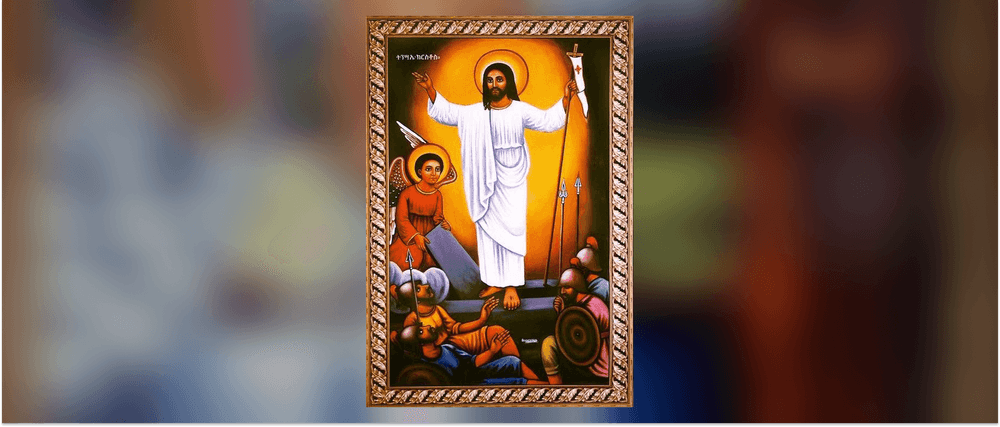
The Sacrament of the resurrection of the Dead
This article explores the profound theological understanding of the Resurrection of the Dead as a central sacrament in the Ethiopian Orthodox Tewahedo Church, emphasizing its role as one of the five pillars of mystery that support the faith. It examines the church's belief in the physical resurrection of all humanity, the eschatological hope rooted in Christ's victory over death, and the connection between the Eucharist and the promise of eternal life. The article reveals how the Ethiopian Orthodox Church maintains a consistent and ancient tradition of resurrection theology, drawing from both scriptural foundations and early Christian doctrine.
Read Full Story