Share
Like
Comment
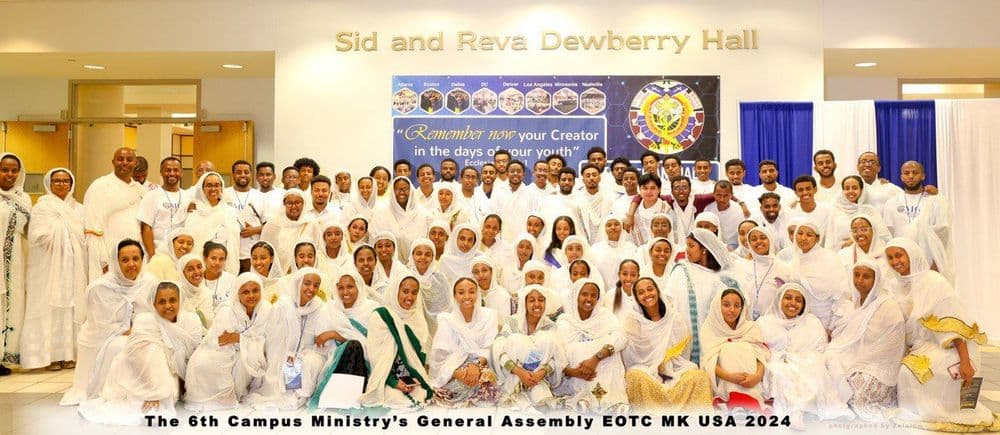
The Ethiopian Orthodox Tewahedo Church: A Living History of Faith, Kings, and Mountains.
by Unknown —7 min read
Few churches on earth can claim a story as long, as unbroken, and as dramatic as that of the Ethiopian Orthodox Tewahedo Church. Its roots reach back to the fourth century. It survived invasion, isolation, and revolution. It carved churches out of solid rock, preserved a Bible with more books than most Christians have ever seen, and today serves tens of millions of believers. If you've ever wondered where this ancient Christian tradition came from, let's walk through the story together.
First, the name. Tewahedo is a Ge'ez word meaning "being made one" or "unified." It points to the church's belief that Christ has one unified nature, both fully divine and fully human, joined without separation or confusion. This is often called the Miaphysite position, and it is shared with the Coptic, Syriac, Armenian, and Eritrean Orthodox churches, which together form the family known as Oriental Orthodoxy.
Our story begins in the Kingdom of Aksum, a powerful trading empire in the highlands of northern Ethiopia and modern Eritrea. Aksum controlled Red Sea trade routes linking Africa, Arabia, Egypt, and India. Merchants, travelers, and ideas flowed through its ports, and that is how Christianity first arrived.
According to tradition, a Syrian Christian named Frumentius was shipwrecked on the Red Sea coast as a boy in the early fourth century. Taken to the royal court, he rose to a position of trust and eventually helped raise the young prince Ezana. When he later traveled to Alexandria, he reported on the Christian community growing in Aksum. Athanasius, the famous Patriarch of Alexandria, consecrated him as the first bishop of Aksum. Ethiopians remember him as Abba Salama, "Father of Peace," or Kesate Birhan, "Revealer of Light."
King Ezana's conversion, around the 330s, made Aksum one of the first states in the world to adopt Christianity officially. You can still see the evidence in the coinage. Ezana's early coins carried pagan symbols, while later ones bear the cross. That is rare, tangible proof of a kingdom changing its faith.
Christianity took root slowly, and it deepened in the late fifth and early sixth centuries with the arrival of the Nine Saints. These monks, probably fleeing theological disputes in the Byzantine world, came from Syria and the wider Eastern Mediterranean. They founded monasteries, taught the people, and spread the faith into the countryside.
Their greatest legacy may be linguistic. They are credited with helping translate the Scriptures into Ge'ez, the classical language of Ethiopia, making the faith truly local rather than imported. Ge'ez remains the liturgical language of the church today, much as Latin once was in the West, and the church's literature written in it is vast.
In the sixth century a figure arose whose influence still echoes in every cathedral and village church: Saint Yared. Tradition holds that he was a gifted young scholar who, inspired by watching a bird sing, composed Ethiopia's sacred chant system. He developed the notation and the three modes of chant known as Ge'ez, Ezel, and Araray. The zema tradition he founded is still taught and performed, accompanied by the sistrum rattle, drums, and prayer staffs during worship. The music is among the oldest living musical traditions in Christianity.
In the twelfth and thirteenth centuries, under the Zagwe dynasty, the church produced one of its most astonishing achievements. King Gebre Mesqel Lalibela is credited with commissioning eleven monolithic churches carved downward into the volcanic rock of the town now bearing his name. Tradition says he envisioned a "New Jerusalem," and the site even includes a river called the Jordan.
The most famous, Bete Giyorgis (the Church of Saint George), is carved in the shape of a cross, sunk into the ground like a stone flower. These churches are still active places of worship, and pilgrims arrive by the thousands, especially during Genna (Ethiopian Christmas). Lalibela is a UNESCO World Heritage Site, but for Ethiopians it is first and foremost a living holy place.
In 1270, Yekuno Amlak overthrew the Zagwe and established what became known as the Solomonic dynasty, which claimed descent from King Solomon and the Queen of Sheba. This story is told in the Kebra Nagast ("The Glory of the Kings"), a national epic that also claims the Ark of the Covenant was brought to Ethiopia by Menelik, the son of Solomon and Sheba.
The church teaches that the Ark rests today in the Church of Our Lady Mary of Zion in Aksum, guarded by a single monk who may never leave the grounds. Whatever outsiders make of the claim, it shaped Ethiopian identity for centuries. Every Ethiopian church houses a replica called the tabot, and the tabot is central to worship and to the great processions of Timkat (Epiphany).
For much of its history, the Ethiopian church was tied to Egypt. Its chief bishop, the abuna, was appointed by the Coptic Patriarch of Alexandria, who was almost always an Egyptian rather than an Ethiopian. After the rise of Islam in the seventh century, Ethiopia became a Christian highland surrounded by an increasingly Muslim world, and contact with other Christians thinned out.
The sixteenth century brought catastrophe. Between 1529 and 1543, Imam Ahmad ibn Ibrahim al-Ghazi, known as Gragn ("the Left-Handed"), led a devastating campaign that destroyed churches, monasteries, and manuscripts across the highlands. Ethiopia survived with the help of a Portuguese military force, and the kingdom was restored.
That help came with strings attached. Portuguese Jesuits sought to bring the Ethiopian church under Rome, and in 1622 Emperor Susenyos converted to Catholicism. The result was unrest and civil war. His son Fasilides reversed the policy in 1632, expelled the Jesuits, and restored the Orthodox faith, founding the royal capital of Gondar, whose castles and churches still stand.
The twentieth century transformed the church. In 1951, Ethiopia received its first native-born head, Abune Basilios, and in 1959 Pope Cyril VI of Alexandria granted full autocephaly, making the Ethiopian church self-governing. In 1992 the Eritrean church followed its own path to independence, and the Eritrean Orthodox Tewahedo Church was recognized as autocephalous by Alexandria in 1998.
Then came revolution. When Emperor Haile Selassie was deposed in 1974, the communist Derg regime ended the church's status as the state church, seized its lands, and persecuted its clergy. Patriarch Tewophilos was imprisoned and executed in 1979. The church endured, as it always had, through its monasteries, its priests, and the faith of ordinary people. After the Derg fell in 1991, the church began to rebuild. Today it is led by Patriarch Abune Mathias, who has held the office since 2013.
Several features set the Ethiopian Orthodox Church apart:
The Ethiopian Orthodox Tewahedo Church today counts tens of millions of followers, making it one of the largest Oriental Orthodox churches in the world, with growing communities across the diaspora in North America, Europe, and the Middle East.
Its history is a reminder that Christianity was never only a Western story. Long before many nations had heard the Gospel, a mountain kingdom in Africa had made it its own, expressed it in its own language, music, and architecture, and held onto it through centuries of trial. When you stand in front of a church carved from a single rock, or listen to a priest chanting in Ge'ez, you are hearing and seeing something very old, and very much alive.
 Unknown
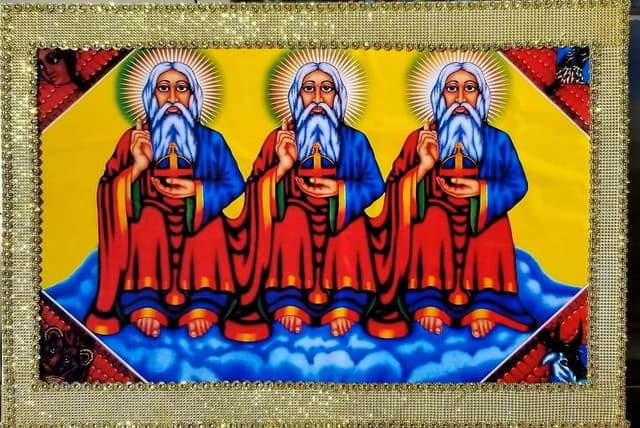
Theology is the systematic study of religious faith, practice, and experience, focusing particularly on the nature of God (or the divine)** and its relationship to the world and humanity. It is essentially the attempt by adherents of a faith to rationally and coherently explore, articulate, and defend their beliefs.
 Unknown
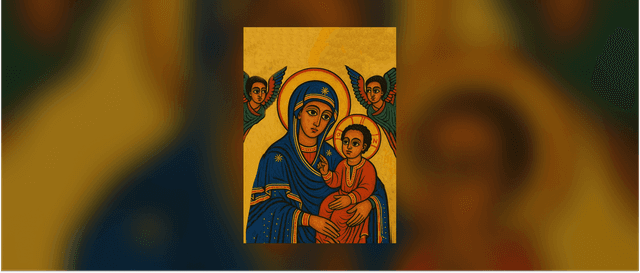
This poem honors Mary, the Mother of God, through the lens of Ethiopian Orthodox tradition, celebrating her as Kidist Mariam (Holy Mary), her perpetual virginity, her role as Theotokos, and her intercessory power. It reflects the deep veneration found in Ethiopian Orthodox spirituality, where Mary is seen as the Queen of Heaven and a compassionate advocate for humanity.