Share
Like
Comment
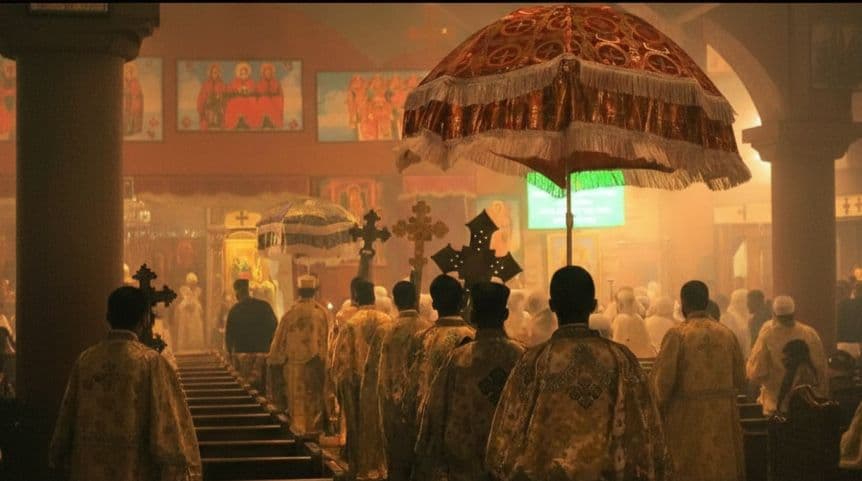
This article explores the role and practices of deacons in the Ethiopian Orthodox Tewahedo Church, one of the oldest Christian denominations in the world. Deacons serve as essential liturgical assistants who participate in sacred ceremonies, chant ancient hymns, and help maintain the spiritual life of their communities. The article examines their ordination process, distinctive vestments, musical traditions including the use of traditional instruments, and their daily responsibilities in church services and community life.
by Shimelis G —2 min read
The Ethiopian Orthodox Tewahedo Church maintains one of Christianity's most ancient and vibrant diaconal traditions. Deacons, known as diaqon in Ge'ez, form the foundational order of clergy and play an indispensable role in the church's liturgical and communal life.
Young men typically begin their journey toward the diaconate through the church's traditional education system. Students attend church schools where they learn:
Ordination occurs through the laying on of hands by a bishop, often when candidates are still quite young, sometimes as early as seven or eight years old.
Ethiopian Orthodox deacons wear elaborate ceremonial garments that reflect their sacred office:
During the Divine Liturgy, deacons perform numerous essential functions:
Perhaps most distinctive is the deacons' role in Ethiopian Orthodox sacred music. They master three modes of chant:
Accompanied by traditional instruments like the kebero (drum), tsenatsil (sistrum), and prayer staffs, deacons create the characteristic soundscape of Ethiopian worship.
Beyond liturgical duties, deacons serve their communities by:
The diaconate in the Ethiopian Orthodox Church represents a living link to early Christian practice, preserving ancient traditions while serving contemporary spiritual needs. These dedicated servants ensure that the rich liturgical heritage of Ethiopian Christianity continues to flourish in the modern era.
 Unknown
Traditionally, a priest’s primary duty is the celebration of the Qeddase — in Ethiopia, typically five priests concelebrate — and other liturgical rites, particularly burials. Liturgical festivals feature rhythmic dancing, the chanting of hymns and the recitation of religious poetry.